Hosting Glossary
What is NVMe?
What NVMe actually means, minus the jargon — with the example that makes it obvious.
The short answer
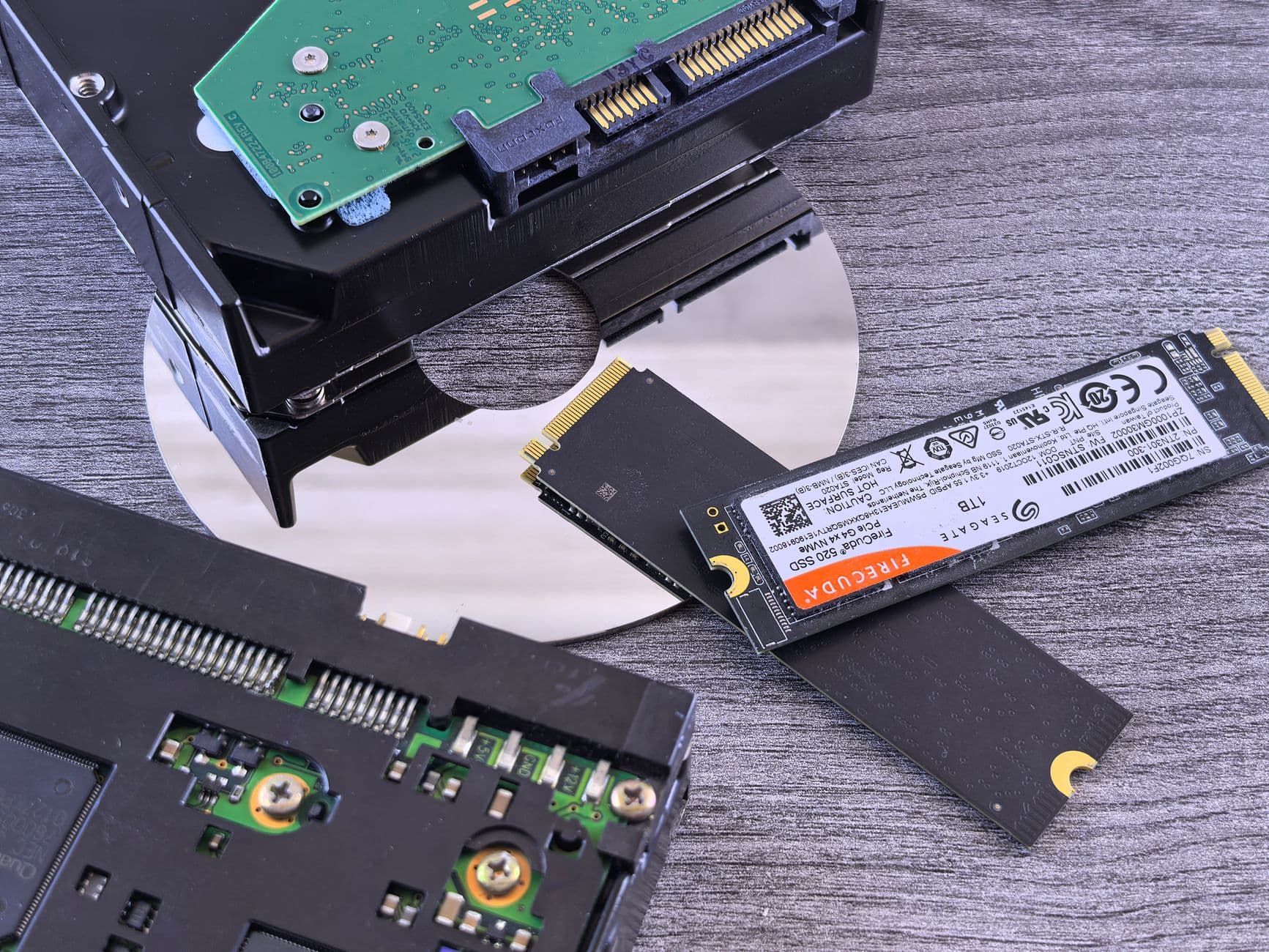
NVMe is flash storage attached over PCIe with a protocol built for it — dramatically faster and more parallel than SATA-era SSDs.
Below: the fuller explanation, an analogy that makes it stick, why it matters in practice, and where you'll actually meet it.
Written by the HostingAlly team · Last revised 27 July 2026
100+
Terms in this glossary
2 min
Average read
Plain
English, promised
24/7
Humans if you're stuck
The acronym (Non-Volatile Memory Express) names the interface revolution: thousands of parallel queues and microsecond latencies where SATA's design assumed spinning disks.
Hosting feels it in the database — random small reads are the workload where NVMe's latency advantage translates directly into snappier dynamic pages and admin screens.
The analogy version
Moving from a single-lane road to a motorway network — not just faster vehicles, but thousands of simultaneous lanes designed for their speed.
Hold onto that picture and most of the documentation you'll ever read about it becomes considerably less mysterious.
The practical stakes
Storage generation is a hosting-quality tell — NVMe as standard (ours is) signals current infrastructure; 'SSD' vagueness at premium prices signals a refresh cycle running behind.
That's the test for every technical term, incidentally — not 'do I understand it fully' but 'do I know when it's the answer to my problem'. For this one, now you do.
What it looks like in practice
The same WordPress site migrated from SATA-SSD hosting to NVMe feels immediately different in wp-admin — every screen a database conversation now answered in microseconds.
Ordinary, once seen — which is the point: most hosting concepts are simple machinery wearing intimidating names.
Where you'll meet it on our platform
On our hosting this mostly takes care of itself — the platform applies the sensible defaults, and the panel exposes the controls when you want them. The concepts worth knowing next: SSD, Disk Space, MySQL and TTFB.
NVMe storage and LiteSpeed caching are standard here, not premium-tier extras.
Jargon is a service failure
We think unexplained jargon is a service failure — this glossary is the support desk's accumulated translations, published where the search engines can hand them out.
Support is answered by real people around the clock — including the questions other hosts call out of scope.
- 100+ terms, plain English
- Analogies and real examples
- Cross-linked related concepts
- Written by the support desk
Why HostingAlly
Every plan includes this, whatever you pay
Linked, not siloed
Related terms cross-reference, so one lookup becomes a working understanding.
Analogies that stick
Each concept gets a picture you'll remember at the moment you actually need it.
Plain English first
Every term defined for site owners, not for other sysadmins — jargon translated, not restated.
Grounded in a real platform
Examples reference the hosting you'd actually use, not abstract diagrams.
The next reads, mapped
This entry connects to SSD and Disk Space — concepts travel in packs, and the pack is linked.
One term, fully landed
NVMe defined, pictured by analogy and placed in your own control panel — recognise-level in a single read.
Getting Started
How to get going
- 1
Spot it in your own setup
The fastest way to learn a hosting term is to find it in your own panel — five minutes of looking beats an hour of reading.
- 2
Check the defaults
Confirm how your account has this configured — usually correctly by default here, and now you'll know rather than guess.
- 3
Follow the related terms
Concepts travel in packs — SSD, Disk Space and MySQL complete this one's picture, and each is a two-minute read away.
Included
What's covered on our plans
- Softaculous one-click app installer
- 24/7 support from real people
- One-click installer for WordPress and 400+ apps
- 99.9% uptime commitment, monitored around the clock
- cPanel — the industry-standard control panel
- No setup fees, ever
- Upgrades apply in place — no migrations between plans
- Renewal prices that match signup prices
- Webmail plus IMAP, POP and SMTP access
- DDoS protection at the network level
FAQ
Your questions, answered
NVMe versus SSD — aren't they the same thing?
All NVMe drives are SSDs; not all SSDs are NVMe — the flash may be similar, but the connection protocol (PCIe/NVMe versus SATA) bounds the performance. The label to look for is NVMe specifically.
Does NVMe matter for a small site?
Proportionally, most — small sites live or die on database latency (uncached pages, admin work), which is exactly where NVMe bites. It's also why we run it across plans rather than gating it behind premium tiers.
Can I transfer a domain I already own?
Yes — transfers in are routine: unlock the domain at the current registrar, grab the auth code, and start the transfer from your client area. The remaining registration time carries over, and DNS keeps working throughout.
Which control panel do you provide?
cPanel — the industry standard, which means every tutorial on the internet matches your screen, your backups restore anywhere cPanel runs, and skills learned here transfer for life. Plesk and DirectAdmin options exist on specific plans for those who prefer them.
Are backups included, and can I restore them myself?
Daily automatic backups are standard, restorable from the panel in minutes — files, databases or both, at 3am without a ticket if that's when you need it. For extra cover, you're welcome to run your own offsite copies alongside.
Can I host more than one website on a plan?
On the Pro tier and above, yes — multiple sites with their own domains, email and SSL under one account. If the extra sites belong to clients rather than you, reseller hosting gives each one proper isolation instead.
What happens to my data if I cancel?
Your site and files remain yours — download a full backup from the panel any time, before or during cancellation. Domains stay registered to you for their paid term and can transfer to any registrar after the standard 60-day window.
Keep exploring
SSD
An SSD stores data in flash memory with no moving parts — the storage generation that retired spinning drives from serious hosting.
TTFB (Time To First Byte)
TTFB measures the delay between requesting a page and receiving its first byte — the server-and-network share of perceived speed.
Domain Names
Search, register and transfer domains — first year free on annual hosting.
Web Hosting
NVMe cPanel hosting with free SSL, migration and a free first-year domain.
Planning to switch hosts? Grab the checklist here.
The steps that keep a site migration dull rather than dramatic: what to back up first, how to shift email across without losing a single message, when to touch DNS, and the two mistakes behind nearly every hour of downtime we come across.
Your site deserves better hosting.
Every plan includes the essentials others sell as extras — and support that actually answers.
View Domain Names plans